event
'Exiting' segregated spaces, creating wealth? Racial wealth divide and spatial mobility in post-apartheid South Africa
5 March 2026
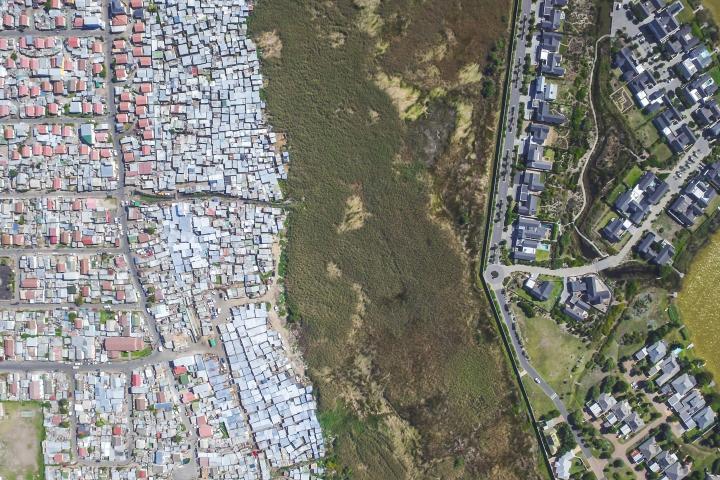

This seminar focused on housing as an important primary asset type for wealth accumulation and intergenerational mobility for a majority of the population in post-apartheid South Africa.
Arindam Jana presented a descriptive study that tracked the kind of settlements that individuals were residing in South Africa over a 10-year period, and the perceived value of the houses they lived in. The study is co-authored with Vimal Ranchhod.
The authors use data from the National Income Dynamics Study (NIDS) – a nationally representative panel study conducted over five waves in South Africa between 2008 and 2017. The analysis shows that the majority of people from marginalised race groups continue to live in the areas that were designated for their race groups under apartheid. This, in turn, correlates with lower housing asset prices in these areas, sustaining the long legacies of apartheid, and leads to a focus on what may have changed since the onset of democracy more than 30 years ago.
In the period from 1994, shortly after people were free to migrate out of erstwhile racially segregated spaces, providing access to formal housing in urban South Africa – both as shelter and as a mechanism of wealth creation – featured heavily in the state’s social welfare policies. However, the researchers find that that the promise of wealth creation from the freedom of movement is yet to dismantle legacies of racialised geographies, which is raising questions about whether spatial mobility from historically segregated spaces enables marginalised populations to convert access to improved housing conditions (as well as markets) to measurable wealth gains.
The study finds that even though increased rural–urban migration has been well documented in post-apartheid South Africa, there are very low rates of movement across settlement types. Movement out of erstwhile segregated spaces is found to be marginal at best. Among those who do ‘exit’ segregated spaces, the researchers find evidence of increased housing wealth and plausible improvements in socio-economic outcomes, but these gains present strong signs of a racial divide.
There is also compelling evidence of limited social mobility over time: though marginalised population groups realise significant absolute gains in housing assets, on a relative scale, they continue to be located at the left tail of the distribution.
These results contribute to both the spatial economics literature on residential sorting and the decent living standards framework by demonstrating the relationship between spatial mobility and asset accumulation in contexts of historical spatial exclusion. The authors also present evidence of a complex paradox at play in transitional societies like South Africa. Although state action is enabling quantifiable gains in social outcomes by increasing access to housing, logics of wealth creation appear to be reinforcing pre-existing gaps, leading to questions of whether spatial integration policies alone can redress historical wealth gaps.
This webinar is part of the 2026 online seminar series of the Cluster of Research Excellence in Inequalities, Deprivation, and Poverty.
Arindam Jana is a Postdoctoral Fellow at ACEIR and is based at the Southern Africa Labour and Development Research Unit in the School of Economics, University of Cape Town. He works predominantly on understanding the determinants of urban and spatial inequalities. His research looks at how varied sources of city-level data can be used to assess the spatiality of different forms of inequalities within the city. In his doctoral research, he approached this problem from the lens of urban planning practices and place-making, asking how space itself contributes to the experiences of inequalities within cities. His current research areas are broadly under two streams: first, in extending his doctoral research towards studying intra-city inequalities in labour market access and outcomes; and second, on the mechanics of wealth accumulation and its welfare implications, with a particular focus on the urban. He has a background in economics and mathematics.
Vimal Ranchhod is the Director of the Southern Africa Labour and Development Research Unit, School of Economics at the University of Cape Town. He is a co-director of ACEIR and also the convenor of ACEIR's South Africa node. He holds a PhD in Economics from the University of Michigan, United States. His research interests include labour economics, economic demography, the economics of inequality, and the economics of education.
Image: Masiphumelele/Lake Michelle, Cape Peninsula, South Africa. Photo by Johnny Miller, Unequal Scenes. Used with permission.